Subscribe to our newsletter and stay informed about the latest exclusive giveaways and updates!

Grace Under Pressure: Discover Your Resilience Style and Thrive Through Life’s Challenges
Explore the different styles of resilience and how grace under pressure shapes your response to adversity. Learn how to identify your coping strengths, build emotional endurance, and grow through life’s toughest seasons.
6/24/20254 min read
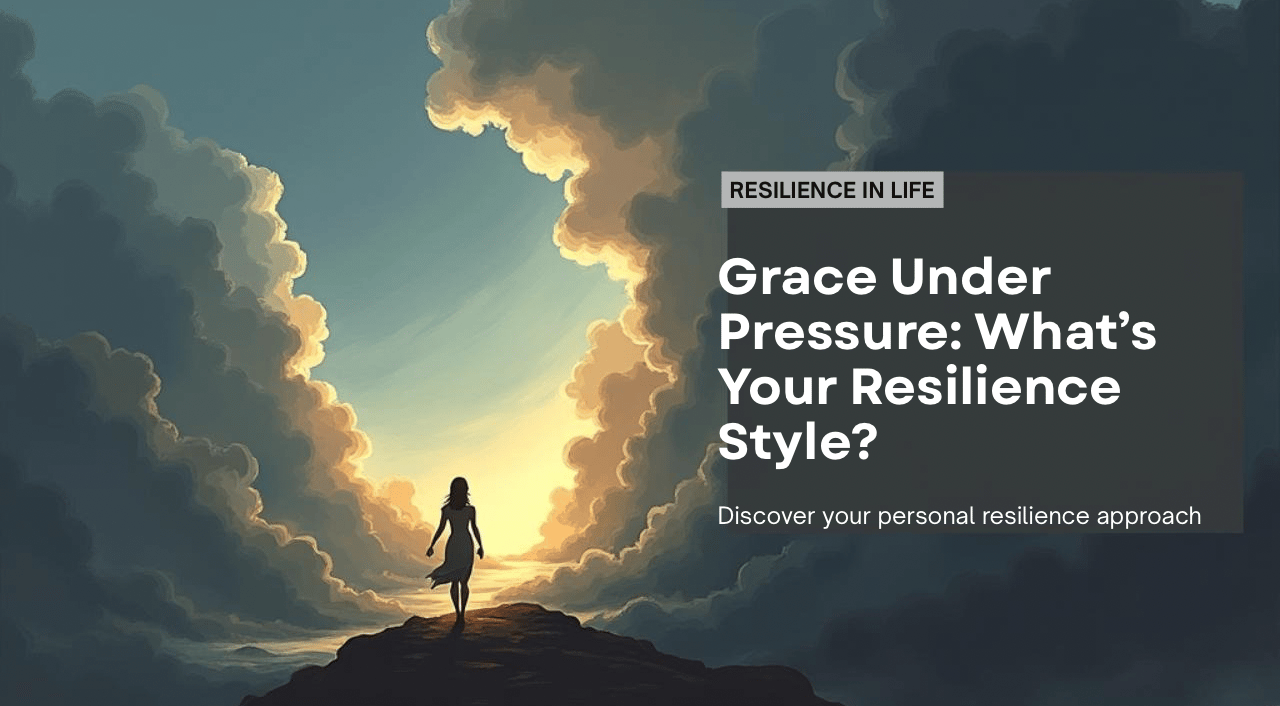
🌈 Coping Styles: Navigating Life’s Challenges with Grace and Resilience
Hey there, lovely readers! Life has a way of throwing curveballs when we least expect it. Whether it’s a personal setback, a professional disappointment, or a global crisis that shakes our sense of security, challenges are an inevitable part of the human experience. And while we can’t always control what happens to us, we can choose how we respond. That’s where coping comes in.
Coping is the set of strategies we use to manage stress, process emotions, and adapt to change. It’s not about avoiding pain—it’s about learning to live through it, grow from it, and emerge stronger. The beauty of coping is that it’s deeply personal. There’s no one-size-fits-all approach. What works for one person may not work for another, and that’s perfectly okay.
In this guide, we’ll explore different coping styles, how they show up in our lives, and how to cultivate a toolkit that supports your well-being. Whether you’re someone who talks it out, writes it down, moves your body, or seeks quiet reflection, your coping style is valid. Let’s dive in.
🧠 Understanding Coping: What It Really Means
Coping is more than just “getting through” a tough time. It’s the process of managing internal and external demands that feel overwhelming. Psychologists often categorize coping into two broad types:
Problem-focused coping: Tackling the issue head-on. This might involve making a plan, seeking solutions, or taking direct action.
Emotion-focused coping: Managing the emotional response to the problem. This includes practices like journaling, talking to a friend, or engaging in self-care.
Both styles are valuable, and most people use a combination depending on the situation. The key is flexibility—being able to adapt your coping strategies to meet your needs.
🗣️ Social Coping: The Healing Power of Connection
For many, the first instinct during a crisis is to reach out. Talking to a trusted friend, family member, or mentor can be incredibly grounding. Social coping involves seeking support, sharing experiences, and leaning on others for comfort and perspective.
Why It Works
Validation: Hearing “me too” or “I understand” can ease feelings of isolation.
Perspective: Others may offer insights or solutions you hadn’t considered.
Emotional release: Expressing feelings helps process them.
How to Practice
Schedule regular check-ins with someone you trust.
Join a support group or online community.
Practice active listening and empathy in your relationships.
Social coping reminds us that we’re not alone. It builds connection, fosters resilience, and strengthens our emotional bonds.
✍️ Creative Coping: Expression as Liberation
Some emotions are too complex for words. That’s where creativity steps in. Whether it’s writing, painting, music, or movement, creative coping allows us to channel our feelings into something tangible and transformative.
Why It Works
Catharsis: Creativity provides a safe outlet for intense emotions.
Insight: Artistic expression can reveal subconscious thoughts and patterns.
Empowerment: Creating something meaningful fosters a sense of agency.
How to Practice
Keep a journal to explore your thoughts and feelings.
Try expressive arts like collage, poetry, or dance.
Use color, sound, or movement to reflect your emotional state.
Creative coping is not about being “good” at art—it’s about being honest. It’s about letting your inner world speak in its own language.
🏃 Physical Coping: Movement as Medicine
Stress doesn’t just affect the mind—it lives in the body. Physical coping involves using movement to release tension, boost mood, and restore balance. From a brisk walk to a full workout, moving your body can be a powerful way to cope.
Why It Works
Endorphins: Exercise releases feel-good chemicals that reduce stress.
Distraction: Physical activity shifts focus away from worry.
Grounding: Movement reconnects you with your body and breath.
How to Practice
Find a form of movement you enjoy—walking, yoga, dancing, swimming.
Use exercise as a daily ritual, not just a reaction to stress.
Pair movement with music or nature for added benefit.
Physical coping doesn’t have to be intense. Even gentle stretching or mindful breathing can make a difference.
🧘 Mindful Coping: Anchoring in the Present
Mindfulness is the practice of being fully present, without judgment. In times of stress, it helps quiet the mind, soothe the nervous system, and cultivate inner peace. Mindful coping includes meditation, breathwork, and grounding exercises.
Why It Works
Regulation: Mindfulness calms the fight-or-flight response.
Clarity: It helps you observe thoughts without getting swept away.
Acceptance: Mindfulness fosters compassion and non-resistance.
How to Practice
Try guided meditations or apps like Insight Timer or Headspace.
Use breathwork techniques like box breathing or 4-7-8 breathing.
Practice grounding by focusing on your senses—what you see, hear, feel.
Mindful coping teaches us to respond rather than react. It creates space between stimulus and response, allowing for intentional action.
🧑⚕️ Professional Coping: Seeking Expert Support
Sometimes, the weight we carry needs more than personal tools—it needs professional guidance. Therapy, coaching, or counseling can provide structure, insight, and healing. Seeking help is not a sign of weakness—it’s a courageous act of self-care.
Why It Works
Expertise: Professionals offer evidence-based strategies.
Safety: Therapy provides a confidential space to explore emotions.
Growth: It helps uncover patterns and build new coping skills.
How to Practice
Research therapists or counselors who align with your values.
Consider virtual options for accessibility and convenience.
Use therapy as a proactive tool, not just a crisis response.
Professional coping can be life-changing. It equips you with tools, perspective, and support to navigate life’s complexities.
🧰 Building Your Personal Coping Toolkit
Coping is not one-size-fits-all. It’s a personalized blend of strategies that evolve with you. Here’s how to build your own toolkit:
1. Reflect
What has helped you in the past?
What drains your energy?
What feels authentic and sustainable?
2. Experiment
Try new techniques and notice what resonates.
Be open to adjusting your approach.
3. Adapt
Your needs may shift—stay flexible and compassionate.
Honor your current capacity and adjust accordingly.
4. Integrate
Make coping part of your routine, not just a reaction.
Create rituals that support your emotional health.
Your coping toolkit is a living resource. It grows with you, supports you, and reflects your journey.
💬 Final Reflection: You Are More Resilient Than You Know
Coping is not about being unshaken—it’s about learning to sway with the wind and still stand tall. It’s about honoring your emotions, seeking support, and trusting that you have what it takes to weather the storm.
So, lovely reader, when life gets tough, remember:
You don’t have to do it perfectly.
You don’t have to do it alone.
You just have to keep showing up for yourself.
One breath, one step, one moment at a time.
You are stronger than you think. You are more resilient than you know. And you have the power to overcome whatever challenges come your way.
Take care of yourself. Be kind to yourself. And remember—it’s okay not to be okay sometimes.
You’ve got this.